"Best," "top," "No. 1" — these words get printed on a hundred websites a day, mine included. On their own, they mean almost nothing. A title only matters when there's something verifiable behind it: years of actual client sessions, a public review trail, a specialty you can name, and a track record that holds up under a little scrutiny. Before you book anyone, it's worth asking not "are they the best" but "best at what, and how do I know?"
There's a real difference between someone who did a weekend course eight years ago and someone who has been sitting across from clients, session after session, for eight years. Ask directly: how many years have you been doing paid readings, and roughly how many sessions?
Be cautious of anyone who claims to be equally excellent at love, career, health, legal disputes, and black magic removal, all at once. In two decades of reading, I've found the practitioners clients trust most are the ones who are honest about where their strength actually lies — for me, that's love and relationships, career decisions, and business timing.
Before you pay, you should know how long the session runs, whether it's over video, phone, or WhatsApp, and roughly what you'll walk away with. If a reader stays vague about this until after payment, that's worth noticing.
Testimonials typed onto a website are easy to write. A public Google rating with a real review count, or a returning-client percentage a reader is willing to state openly, is much harder to fake.
Tarot shows you where your current path is heading, not an unchangeable fate. Be wary of any reader who frames every reading as fixed, especially when that "fixed future" happens to require an expensive remedy to change.
A genuine reader will occasionally tell you that a question needs a doctor, lawyer, or financial advisor instead of a card spread. That refusal is actually a trust signal, not a weakness.
Especially if you're a public figure, a corporate executive, or simply someone who values privacy, ask how the reader handles confidentiality. This matters enormously in my own practice — a large part of my client base comes from Bollywood and corporate backgrounds precisely because discretion is non-negotiable for them.
A few patterns show up again and again with readers who are more interested in your wallet than your wellbeing:
- Fear-based readings that insist something terrible will happen unless you act immediately.
- Pay-to-remove "curses" — a spread that conveniently reveals a curse or negative energy that only their paid remedy can fix.
- Escalating costs — a reading that starts affordable and keeps growing once you're emotionally invested.
- No willingness to answer basic questions - about their experience, process, or specialty before you book.
- Guaranteed outcomes — "I promise he will come back" or "you will definitely get this job." Tarot can point to likely energy and direction; no ethical reader promises a guaranteed future.
If you notice two or more of these in your very first conversation, it's reasonable to walk away.
I didn't start out here. Before tarot, I was pursuing an MSc in Chemistry, with plans to go further into medicine. It's an unusual background for this field, and I've thought a lot about why it still shapes how I read. Science trained me to look for patterns, to be skeptical of easy answers, and to be honest when something doesn't add up. I bring that same discipline into a reading — I'm not interested in dramatic predictions that sound impressive and vague. I'm interested in what the cards are actually pointing to, and whether that gives you something you can act on. Over 4,500+ readings and 190+ decks later, that scientific instinct for pattern and evidence still guides every session I do.
Both work, and the difference is mostly about your own comfort. Online tarot reading in India, over video call, phone, or WhatsApp, has become just as common as in-person sessions, and in my experience, accuracy doesn't change based on format. What matters is whether the reader can focus fully on your question and your energy, not whether you're sitting across a table or across a screen.
No prediction is ever 100% guaranteed — anyone claiming otherwise should raise a flag. What you can find is a reader whose guidance is consistently reliable and useful for decision-making.
Prices vary widely by city and reader experience, but be especially cautious of prices that balloon mid-session for "additional remedies."
A responsible reader will give you a likely timeframe or window based on the energy shown, not a false sense of exact certainty.
Yes. Over video call, phone, or WhatsApp, an online session can be just as accurate as sitting across a table. Focus and clarity of the question matter more than format.
Choosing the right tarot reader isn't about finding someone with the flashiest title — it's about finding someone whose experience, specialty, and approach you can actually verify. If you'd like to see how I measure up against this list myself, you can read more about my background and 20+ years of sessions on my India page, or reach out directly on WhatsApp at +91 9967401160 to ask any of these questions before you book.
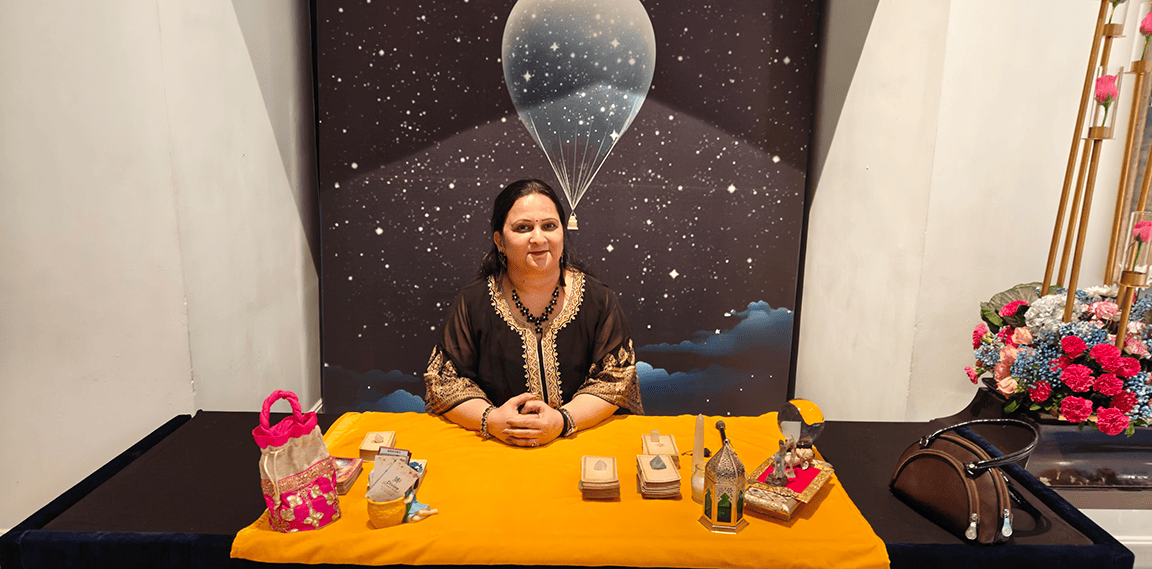
Divine Monica Harsh is an Icons of India 2026 Award-winning tarot card reader based in Mumbai, with 20+ years of professional experience and 4,500+ readings delivered to clients across India and internationally.