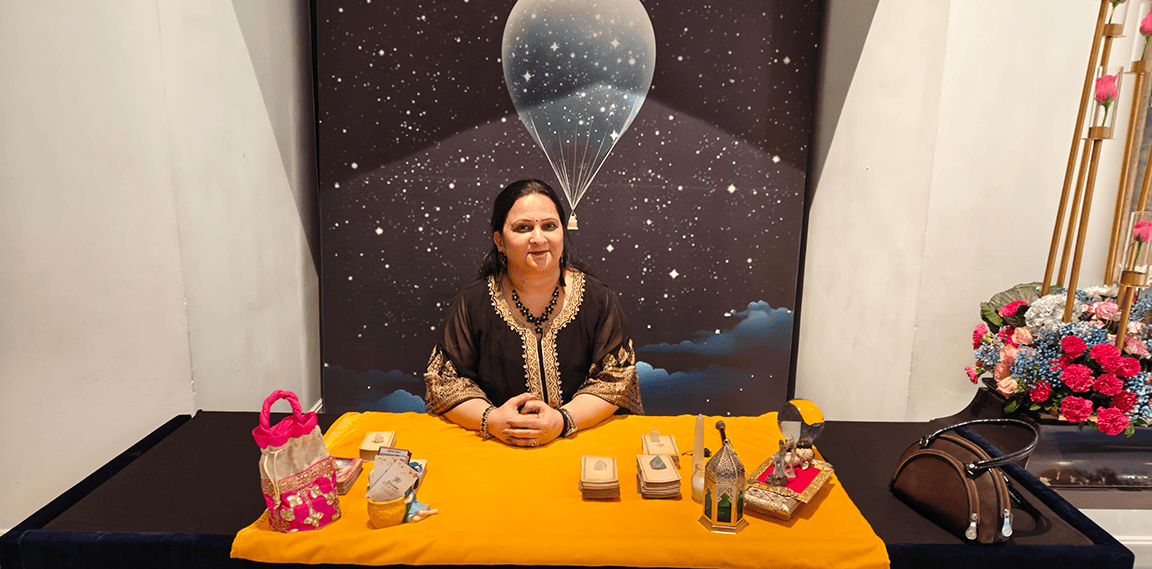
Tarot has moved from a niche curiosity to an everyday tool in India because it meets a very modern need: a calm, private way to think through a decision. Public figures use it for discretion, business owners for timing and risk, working professionals for career crossroads, and families for the big life questions. Below is where that popularity comes from, who is really using tarot, and what a good reading can and can't do. I'm Divine Monica Harsh, a Mumbai-based tarot card reader with over 20 years of practice, and this is the picture from my side of the table.
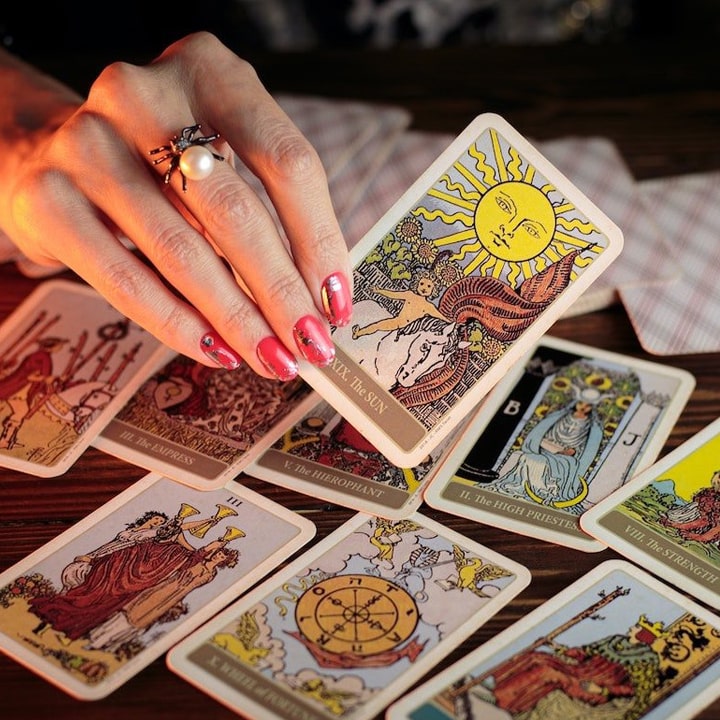
 Tarot did not begin as an Indian tradition. The 78-card deck started in 15th-century northern Italy as a card game, and only picked up its fortune-telling reputation in Europe in the late 1700s. The deck most readers use today, the Rider-Waite-Smith, was published in 1909. India already had its own rich ways of looking at life's questions: Jyotish (Vedic astrology) and kundli matching, Samudrika Shastra (palmistry), Vastu and Ank Jyotish (numerology). Tarot arrived beside these rather than in place of them, and for many people it now sits comfortably next to them as a different tool for a different kind of question.
People in the public eye make decisions under scrutiny: a role to accept, a launch to time, a relationship to protect. For them, a private conversation matters as much as the cards. That is why discretion is the first thing I promise any client from the film, television or corporate world: no names shared, no details repeated and no session used as an example without permission. When a celebrity says they consult tarot, it's worth remembering that the value is rarely a prediction. It is a quiet hour to think clearly.
 Tarot has also become part of entertainment. A tarot reader was introduced as a guest on Bigg Boss OTT 3 and read a contestant's cards on stage, and entertainment websites regularly publish tarot-based guesses about who will win a finale. That visibility has pulled many first-timers towards the cards, which is no bad thing. But a winner prediction is a guess dressed up as a reading: no spread can know how a public vote will swing. I don't make predictions about reality-show results, and I'd encourage you to treat them as fun rather than as evidence of what tarot can do.
In a country where so many livelihoods rest on family businesses, trading houses and first-generation ventures, decisions carry real weight: taking on a partner, entering a new market, choosing a date to open the shop. Tarot isn't a financial adviser and should never replace one, but a structured reading helps owners separate what they know from what they fear. It is a pattern I see often: owners bring a question before the decision, not after it.
A job offer in another city, a move from a stable role to a start-up, a choice of course abroad: these crossroads are among the most common reasons first-time clients book. They rarely want to be told what to do. They want their options laid out clearly enough to choose one.
 Marriage, relocation, ageing parents, children's education: family decisions in India seldom involve one person, and tarot lets each person set down their own questions before the conversation at home begins. Many people use it alongside kundli matching rather than instead of it.
A growing group draws a single card each morning the way others keep a journal or sit quietly before the day starts. It costs nothing and takes about ten minutes, and over time it sharpens the questions you ask yourself.
• It is question-led. You don't need a birth chart or an exact birth time. You need a question, which lowers the barrier for beginners.
• It is visual. The images do much of the work, so a first-timer can follow a reading without learning technical vocabulary.
• It works online. A video call, phone call or WhatsApp session means someone in Surat or Kochi can sit with a reader in Mumbai without travelling.
• It is private. Many people would rather explore a personal question with someone who has no stake in the answer.
• It gives a pause structure. After years of fast work and faster feeds, people want a slower way to think, and a spread gives that pause a shape.
| A good reading can | A good reading cannot |
|---|---|
| Lay out your options and what each might involve | Tell you a fixed future |
| Bring up worries or patterns you have been avoiding | Replace a doctor, lawyer or financial adviser |
| Help you find the real question behind your question | Predict lottery numbers, exam ranks or reality-show winners |
| Give you a calm hour to think | Make the decision for you |
• Bring a decision, not a demand for a prediction.
• Ask open questions ("What should I weigh here?") rather than "Will it happen?"
• Don't ask the cards to read other people's private thoughts as fact.
• Don't keep repeating one question; a single honest reading is worth more than five anxious ones.
• Act on what you learn, or the reading changes nothing.
 Clients reach me from Mumbai, Pune, Indore, Ahmedabad, Delhi, Bengaluru, Hyderabad, Jaipur, Kolkata, Chennai and many smaller cities, and the reasons are simple and checkable. I have read professionally for over 20 years, with 4,500+ readings and 190+ tarot and oracle decks behind me. My training began in the sciences, which is why I would rather give you a clear option than a dramatic prediction. Sessions are private and clearly priced, and they run online or in person in Mumbai. I was honoured with the Icons of India 2026 Award, but I would rather you judge me by how a session actually feels. To see how it works, read about a tarot card reader working with clients across India, or message me on WhatsApp at +91 9967401160.
Interest has grown noticeably, helped by online sessions, social media and entertainment coverage. Exact figures vary by source, so treat any single statistic with caution.
Tarot is a reflective tool, not a religion, and many people use it alongside kundli and other traditions. If your family prefers to stay with traditional methods, that is entirely your choice.
Some public figures have said so in interviews, but I can't verify individual claims, and I never discuss my own clients. A more useful question is what a reading offers anyone: privacy and perspective.
No. Group outcomes depend on votes and events that no spread can know. Treat such predictions as entertainment.
No. Clients anywhere in India can book by video, phone or WhatsApp, and in person in Mumbai. You can see how this works on my India tarot reading page.